Hard (Acrylic) GuardGold standard
Made from transparent acrylic and precisely balanced on the bite. The most effective and longest-lasting option for moderate to severe bruxism.
If you clench or grind your teeth in your sleep without realizing it (bruxism), your teeth are wearing down every night. A thin, transparent night guard made from custom impressions protects your teeth, fillings, and crowns from wear, and relieves the jaw joint and muscles.
A night guard is a thin, transparent protective appliance custom-made from your impressions that fits over the upper or lower teeth. It is designed to prevent the damage caused by teeth clenching and grinding during sleep (bruxism) to the teeth and jaw joint. It is also referred to as an occlusal splint.
The guard cuts direct tooth-to-tooth contact, distributing clenching forces over a wide surface. This prevents enamel wear, tooth fractures, morning headaches and jaw pain, and temporomandibular joint (TMJ) complaints. It is balanced to your bite by your dentist and can be worn without disturbing your sleep.
Bruxism is most often stress-related involuntary clenching and grinding of teeth during sleep. The most common signs include morning jaw fatigue, temple headaches, shortened or worn teeth, and cold sensitivity; most people discover the condition from their partner or dentist.
The guard creates a protective barrier between the upper and lower teeth; it distributes clenching forces and eliminates direct tooth contact. Wear occurs on the replaceable guard rather than on your natural teeth.
Over-the-counter products use a standard mold; they don't fit precisely, don't balance your bite, and can strain the jaw joint. A professionally made guard is produced to your own impressions, calibrated to your bite, and monitored with regular check-ups.
A consistently worn, custom-fitted night guard stops the chain of damage bruxism causes to your teeth and jaw joint in the simplest and most protective way possible.
Enamel, fillings, and crowns are shielded from clenching forces; tooth shortening, fractures, and crack formation are prevented.
Load on the temporomandibular joint (TMJ) is reduced; morning headaches, jaw fatigue, and joint noise complaints ease.
Because it is custom-made to your impressions, it fits your mouth perfectly; its slim profile makes it easy to get used to quickly without disrupting sleep.
Zirconium crowns, veneers, and implant-supported teeth are protected by the night guard; your investment in aesthetic treatments stays safe for many years.
It is considered for patients of all ages who show signs of bruxism. The need is determined at the examination through wear marks on the teeth and an assessment of the muscles and joint.
Morning jaw fatigue, headaches in the temple area, and cheek bite marks are typical signs of nocturnal teeth clenching; a guard noticeably reduces these complaints.
Flattened or shortened incisal edges or teeth sensitive to cold are traces of clenching. The guard stops further progression; if needed, fillings or crowns can be planned for existing damage.
For patients who clench their teeth, dentists generally recommend a protective night guard after aesthetic treatments; porcelain and zirconia surfaces are safeguarded against fracture.
Nighttime grinding is common in children and usually resolves on its own with growth. If wear is noticeable or complaints arise, a dental evaluation is carried out; an age-appropriate guard is planned when considered necessary.
The most suitable guard type is determined at the examination based on the severity of clenching, the condition of your teeth, and your comfort expectations.
Made from transparent acrylic and precisely balanced on the bite. The most effective and longest-lasting option for moderate to severe bruxism.
With its flexible, silicone-like structure, it is the easiest type to adapt to; preferred for mild clenching cases and those new to wearing a guard.
Features a dual-layer construction — soft on the inside, hard on the outer surface — combining comfort with durability; a well-balanced solution for moderate cases.
A therapeutically oriented splint used under dental supervision for temporomandibular joint disorders to reduce joint load and maintain the jaw in the correct position.
A short and comfortable process from examination to delivery; the guard is monitored with regular check-ups throughout its use.
Wear marks on the teeth, jaw muscles, and the joint are examined; the severity of clenching and the need for a guard are determined.
Impressions of your teeth are taken, or an intraoral scanner creates a digital model; the guard is produced custom to you.
The guard is tried in your mouth, precisely balanced to your bite, and instructions for use and care are explained.
At regular check-ups, the fit and wear of the guard are assessed; it is replaced when needed and any complaints are monitored.
The lifespan and hygiene of the guard are directly linked to simple daily care habits.
Clean the guard after each use with cold water and a soft toothbrush; you may also use the cleaning tablets recommended by your dentist.
Hot water, radiators, and leaving it in direct sunlight will permanently deform the guard; only expose it to cold or lukewarm water.
Store the guard dry in its ventilated, perforated case throughout the day; wrapping it in a tissue is the most common cause of losing it.
A worn, cracked, or loose guard loses its protective function; it is assessed at regular dental check-ups and replaced when needed.
If you notice jaw pain in the morning, headaches, or wear on your teeth, come in for an examination; we'll safeguard your teeth and jaw joint with a custom night guard tailored to you.
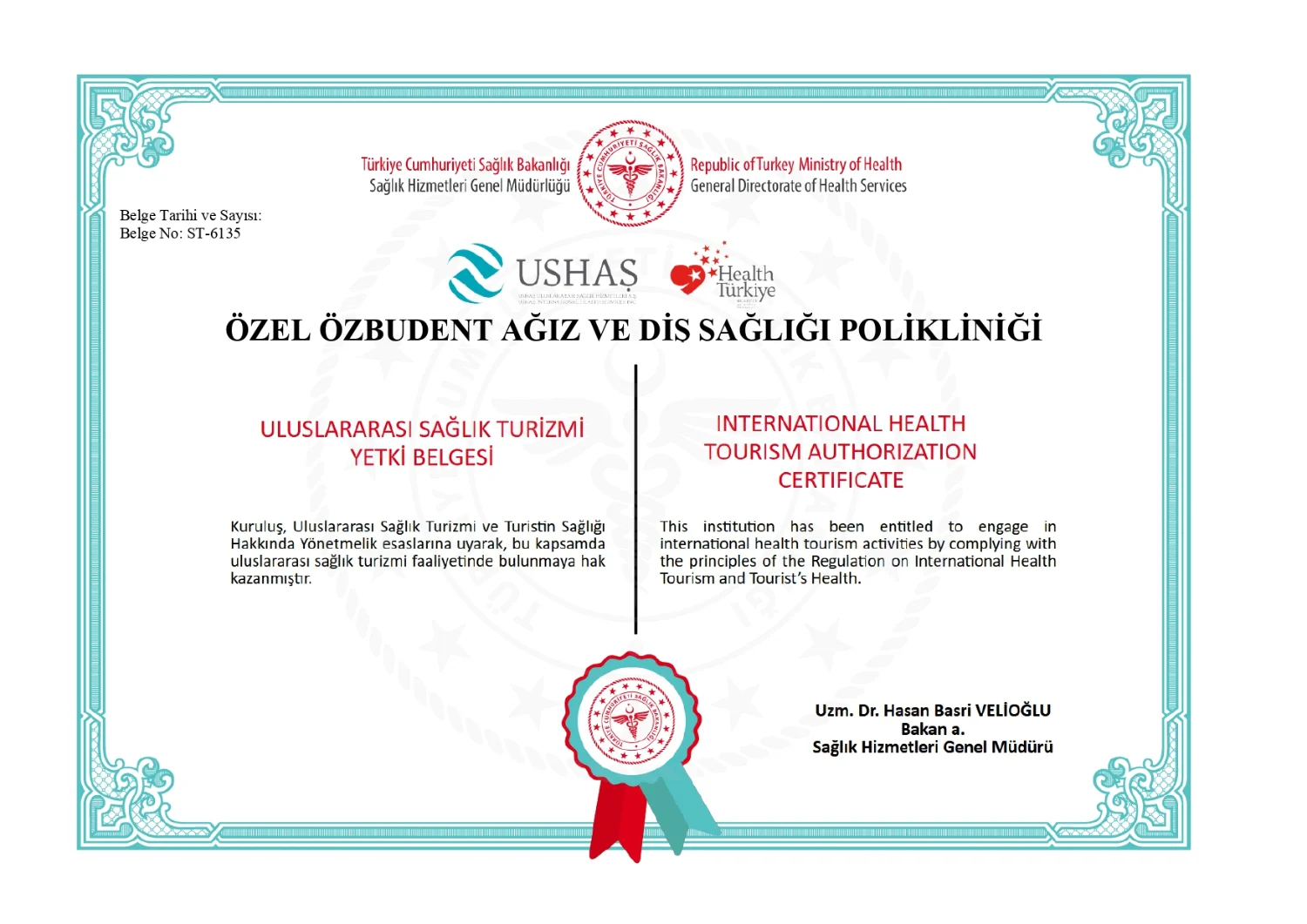

Özel ÖzbuDent Oral and Dental Health Polyclinic holds the International Health Tourism Authorization Certificate, issued by the Republic of Türkiye Ministry of Health under certificate number ST-6135. This certificate shows that our clinic meets the service and quality standards of international health tourism legislation and is officially authorized to serve patients coming from abroad.
Within the HealthTürkiye program, we accompany our international patients end to end — from examination to treatment planning — in implants, cosmetic dentistry and all oral and dental health treatments. Please contact us for detailed information.

You are currently outside our WhatsApp support hours. If you have an emergency, please call us — our clinics are open every day until 03:00. You can still leave your message; we'll get back to you as soon as the line opens.