In-Office WhiteningIn-clinic · single session
Applied by the dentist in the clinic; the gums are protected, then a high-strength whitening gel is activated with a light source. Visible results in approximately one hour.
For teeth stained by coffee, tea, smoking, or the passage of time — clinically supervised teeth whitening that protects your enamel. With in-office, at-home, and combined options, we plan the natural whiteness of your teeth just for you.
Teeth whitening is a procedure in which discoloration that has accumulated over time in the tooth enamel and the underlying dentin layer is lightened using specially formulated whitening gels applied under dentist supervision. The structure of the tooth is not altered; only its color is brightened by several shades while preserving a natural appearance.
Professional in-clinic whitening differs from over-the-counter strips and toothpastes in that it is performed under gum protection at controlled concentrations. This makes the procedure both effective and safe for enamel and gum tissue.
Staining habits such as coffee, tea, smoking, and red wine, enamel thinning with age, certain antibiotics, and poor oral hygiene all cause teeth to yellow over time.
Whitening performed under dentist supervision does not damage the enamel. Before treatment, dental and gum health is assessed, the gums are protected with a special barrier, and clinically approved gels are used.
A scale-and-polish removes plaque and stains from the surface of the tooth; whitening lightens the tooth's own color. For most patients, the best results come from a cleaning first, followed by whitening.
A well-planned whitening treatment delivers the most noticeable change to your smile in the shortest time of any cosmetic procedure.
With in-office whitening, most patients achieve a visible color improvement in a single session of approximately one hour.
No cutting, crowning, or filling is required; only the color is brightened without altering the natural structure of the tooth.
The target shade is determined together with your dentist based on your facial features and tooth structure, delivering a healthy — not artificial — result.
Whiter teeth eliminate the self-consciousness many people feel when smiling in photos, at work, or in social settings.
It is suitable for almost anyone with healthy teeth and gums. The right method is determined at the consultation based on the source of the discoloration.
This is the most common group treated and the one that sees the fastest results; a single in-office session is usually sufficient for extrinsic staining.
As enamel thins with age, the color of the underlying dentin becomes more visible. Combined whitening (in-clinic plus at-home) gives more balanced and longer-lasting results in these cases.
Internal (intra-tooth) whitening is applied to a single tooth that has darkened from the inside following root canal treatment, bringing it in line with the color of adjacent teeth.
Whitening is postponed during pregnancy and breastfeeding, in patients under 18, and when untreated cavities or gum disease are present — existing problems are treated first. Fillings and crowns do not lighten with whitening.
We determine the most suitable method together based on the type of staining, your target shade, and your lifestyle.
Applied by the dentist in the clinic; the gums are protected, then a high-strength whitening gel is activated with a light source. Visible results in approximately one hour.
A low-concentration gel is applied to thin, custom-made clear trays; used at home for 1–2 weeks following the dentist's instructions. Provides a gradual, controlled improvement.
An in-office session is followed up with at-home trays. By combining the strength of both methods, this protocol delivers the most balanced and long-lasting whiteness.
A whitening agent is placed inside a tooth that has darkened internally after root canal treatment; the tooth is lightened in controlled sessions until it matches the shade of adjacent teeth.
From consultation to lasting whiteness — a comfortable, controlled process in four steps.
Your dental and gum health is assessed, your current shade is measured against a color scale, and your target shade is planned together.
A scale-and-polish is performed if necessary to ensure the whitening gel acts evenly across all tooth surfaces.
The gums are protected with a special barrier, the gel is applied and activated with a light source, and the session lasts approximately one hour.
Desensitizing agents are applied; aftercare instructions and a follow-up plan are provided to help maintain your results.
How long your whiteness lasts depends on the care you take in the first days after treatment and your everyday habits.
In the two days after treatment, teeth are most susceptible to staining; avoid coffee, tea, cola, and darkly colored sauces.
Tobacco and dark-colored drinks and foods shorten the life of your whiteness; rinsing with water after consuming them makes a real difference.
Brushing twice a day, flossing, and regular scale-and-polish appointments protect both your whiteness and your dental health.
A brief annual touch-up can preserve your achieved shade for many years; your dentist will guide you at check-ups.
Let us determine the most suitable whitening method for your teeth together. Accurate planning through a consultation and shade analysis, with comfortable payment options available.
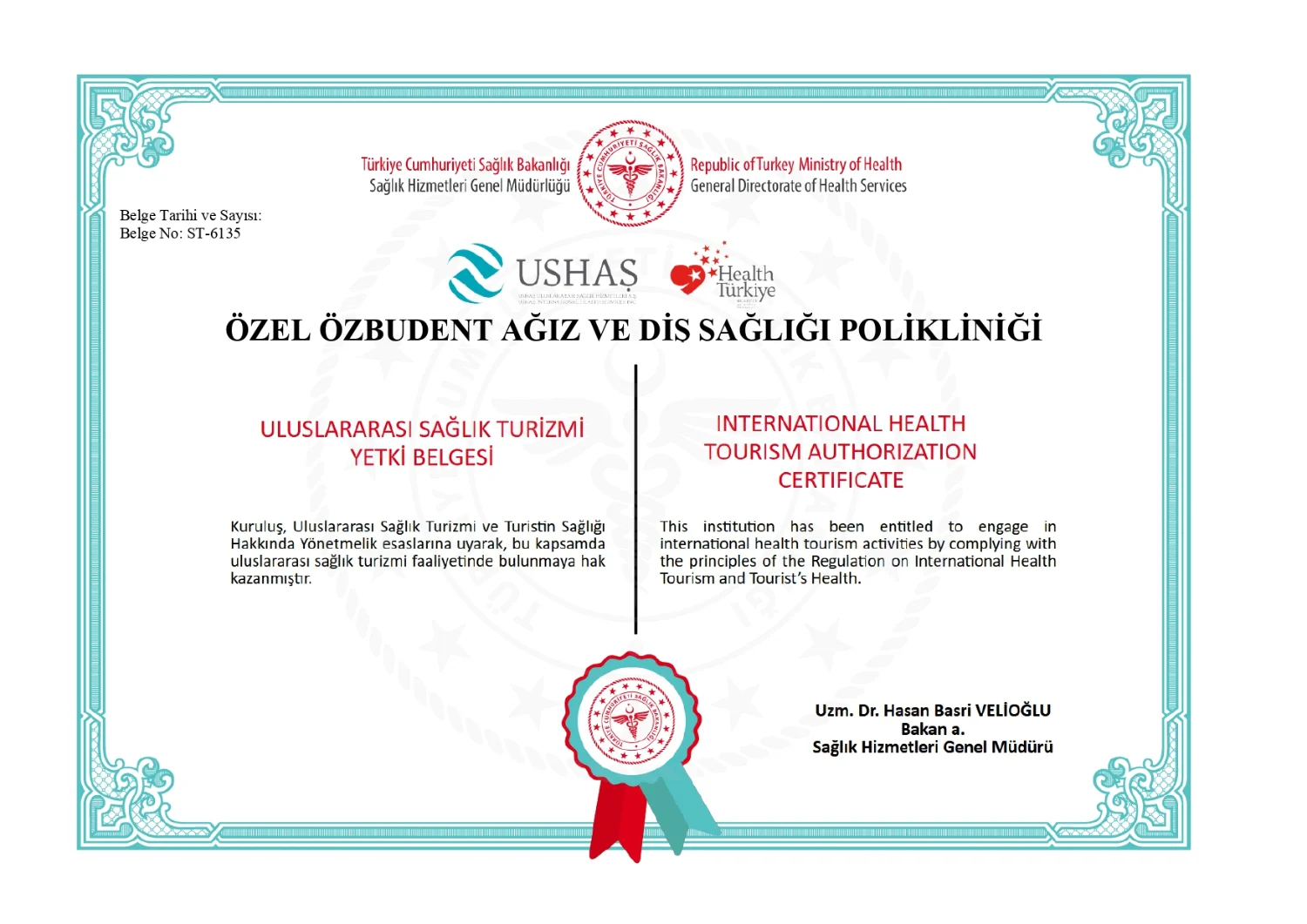

Özel ÖzbuDent Oral and Dental Health Polyclinic holds the International Health Tourism Authorization Certificate, issued by the Republic of Türkiye Ministry of Health under certificate number ST-6135. This certificate shows that our clinic meets the service and quality standards of international health tourism legislation and is officially authorized to serve patients coming from abroad.
Within the HealthTürkiye program, we accompany our international patients end to end — from examination to treatment planning — in implants, cosmetic dentistry and all oral and dental health treatments. Please contact us for detailed information.

You are currently outside our WhatsApp support hours. If you have an emergency, please call us — our clinics are open every day until 03:00. You can still leave your message; we'll get back to you as soon as the line opens.