Single-Tooth Zirconium CrownAesthetics + protection for one tooth
Applied to a single discolored, fractured, or root-canal-treated tooth; the tooth is restored in the same color and shape as the adjacent teeth.
Zirconium crowns offer both aesthetic appeal and lasting strength for teeth that are discolored, misshapen, severely worn, or have undergone root canal treatment. Their light-transmitting quality makes them virtually indistinguishable from natural teeth, and because they contain no metal, there is no gray reflection at the gum line.
A zirconium crown is a metal-free dental crown made by layering porcelain over a white, high-strength ceramic base known as zirconium dioxide. The tooth is slightly reduced in size, and a custom-fabricated crown is permanently bonded over it.
Unlike conventional metal-supported porcelain crowns, zirconium's substructure is white and transmits light the way a natural tooth does. This means no gray line appears at the gum margin, the crown never looks artificial, and its biocompatible structure makes allergic reactions extremely rare.
In metal-supported crowns, the gray substructure reflects light, creating a dull and flat appearance; over time, a gray line may appear at the gum edge. With zirconium, the substructure is white and light-transmitting, so the result closely resembles a natural tooth.
Yes. Zirconium is a biocompatible material that is readily accepted by the body, safe for patients with metal allergies, and compatible with gum tissue.
A veneer (porcelain laminate) is a thin aesthetic covering applied only to the front surface of a tooth; a zirconium crown fully encases the tooth and can also be used on teeth with significant material loss or after root canal treatment — making it a more comprehensive solution. The right choice is determined at your consultation.
Because they meet both aesthetic expectations and chewing demands simultaneously, zirconium crowns are today's most frequently chosen crown type.
Light transmission closely matches natural enamel; color and shape are custom-matched to neighboring teeth, so the crown never looks artificial.
The zirconium substructure is highly resistant to chewing forces and can be used confidently on both front and back teeth, as a single crown or as a bridge.
Because it contains no metal, there is no risk of gray reflection or allergic reaction at the gum margin; its smooth surface reduces plaque accumulation.
Zirconium crowns are far less affected by staining agents such as coffee, tea, and tobacco than natural teeth; their color does not yellow over the years.
They can be applied to virtually any adult patient whose teeth and gums are healthy enough. The correct indication is determined through a clinical examination and X-ray evaluation.
For intrinsic discoloration that cannot be corrected with whitening, and for structural problems that distort the shape of the tooth, a zirconium crown corrects both color and form at the same time.
Teeth with large fillings, fractures, or weakened structure after root canal treatment are fully encased and protected, reducing fracture risk and restoring function.
When one or more teeth are missing, a zirconium bridge supported by neighboring teeth can close the gap aesthetically and durably. A dental implant is also an option; the decision is made together during your consultation.
Treatment is generally deferred in younger patients whose jaws are still developing; untreated cavities and gum disease must be addressed first. If severe bruxism is present, your dentist will plan treatment together with a night guard.
From a single-tooth crown to a full-arch restoration, a range of zirconium solutions are available to suit each patient's needs; the most appropriate plan is determined at the consultation.
Applied to a single discolored, fractured, or root-canal-treated tooth; the tooth is restored in the same color and shape as the adjacent teeth.
The gap left by a missing tooth is closed with a metal-free bridge supported by the neighboring teeth, restoring both chewing function and appearance.
For cases involving comprehensive correction of the color, length, and alignment of the front teeth, zirconium crowns are planned using a smile design protocol; the final result is previewed before placement.
In the final stage of implant treatment, a natural-looking zirconium crown or bridge is placed on the implant, completing the missing tooth both at the root level and in appearance.
A planned, comfortable process of approximately 2–3 sessions from the initial consultation to permanent bonding.
Your dental and gum health is assessed with X-rays; the teeth to be crowned, the target shade, and the desired shape are planned together.
Under local anesthesia, the teeth are reduced by the thickness of the crown; a precise impression is taken and sent to the laboratory for custom fabrication.
Temporary crowns keep your daily life uninterrupted during production; at the try-in, color, shape, and bite are verified, and any fine adjustments are made.
Once you approve the result, the crowns are permanently bonded with special dental cement; care instructions are provided and a follow-up appointment is scheduled.
With proper care and regular check-ups, zirconium crowns can be used problem-free for more than 10 years; daily oral hygiene is the single most important factor in their longevity.
Well-planned and properly maintained zirconium crowns retain their function for an average of 10–15 years — and often longer.
Brushing twice daily and using dental floss (or an interdental brush/super floss for bridges) keeps the gum tissue around the crown margins and the supporting teeth healthy.
Avoid habits such as cracking hard nuts or chewing ice; if you grind your teeth, use the night guard recommended by your dentist.
A check-up and professional cleaning every 6–12 months ensures that the crown margins and gum compatibility are maintained for many years.
Let us assess together whether zirconium crowns are the right option for your teeth. A proper plan established through clinical examination and X-rays, a custom shade selection, and flexible payment options make for a comfortable experience.
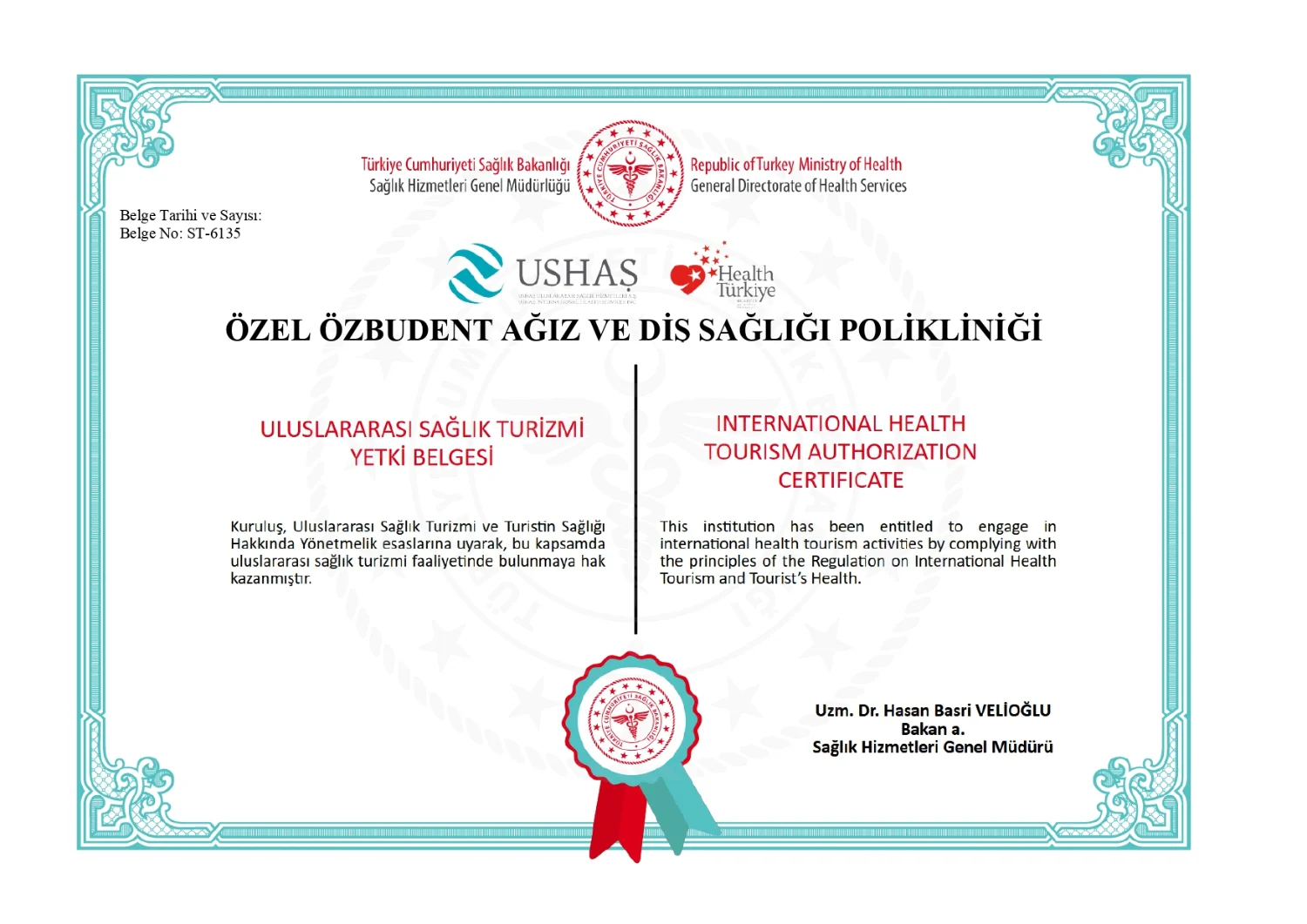

Özel ÖzbuDent Oral and Dental Health Polyclinic holds the International Health Tourism Authorization Certificate, issued by the Republic of Türkiye Ministry of Health under certificate number ST-6135. This certificate shows that our clinic meets the service and quality standards of international health tourism legislation and is officially authorized to serve patients coming from abroad.
Within the HealthTürkiye program, we accompany our international patients end to end — from examination to treatment planning — in implants, cosmetic dentistry and all oral and dental health treatments. Please contact us for detailed information.

You are currently outside our WhatsApp support hours. If you have an emergency, please call us — our clinics are open every day until 03:00. You can still leave your message; we'll get back to you as soon as the line opens.