Simple Tooth ExtractionLocal anesthesia · quick procedure
Removal of a visible, unsalvageable tooth under anesthesia. The procedure usually takes just a few minutes; a post-extraction care plan is provided in the same session.
From extracting teeth that cannot be saved to impacted wisdom tooth surgery, all oral surgery procedures are performed with digital imaging guidance, in a sterile environment and with the comfort of local anesthesia. Our clinics stay open late every day, so you never have to wait out the pain.
Tooth extraction is the removal of a tooth that cannot be saved due to decay, fracture, or gum disease, in order to protect overall oral health. Oral surgery covers situations that require a surgical approach, such as impacted teeth, periapical abscesses, and cysts.
At ÖzbuDent, our priority is always to preserve the tooth; extraction is only planned when conservative options such as fillings and root canal treatment have been exhausted. A digital X-ray assessment is performed before any decision, and how the gap will be replaced (dental implant, denture) is planned together with you.
Extraction is necessary for teeth that are too damaged to be saved with a filling or root canal treatment, for teeth that are severely loosened due to advanced gum disease, and for teeth causing crowding.
A simple extraction involves removing a visible tooth under local anesthesia and takes just a few minutes. A surgical extraction requires a small gum incision for impacted or fractured teeth; it is also performed under anesthesia and is pain-free.
These last teeth to erupt often have no room and remain impacted, which can put pressure on adjacent teeth and lead to pain, decay, and infection. Wisdom teeth that are causing — or are expected to cause — problems are removed surgically.
Surgical procedures require trust. Our experienced team and clinical infrastructure make the process as comfortable as possible for you.
All extractions and surgical procedures are performed under effective local anesthesia; additional comfort options for patients with dental anxiety are planned during the examination.
Impacted tooth and surgical cases are handled by dentists experienced in this field; cross-branch referrals are made for complex cases.
Our clinics are open until late every day; same-day intervention is provided for urgent situations such as unbearable pain and swelling.
Before the procedure, root anatomy and nerve proximity are assessed with digital X-rays; all procedures are carried out under sterile conditions.
Making the right extraction or surgical decision both resolves the current problem and protects neighboring teeth and the jawbone. The most common situations:
When decay or fractures extend to the root level and fillings or root canal treatment are insufficient, the tooth is extracted; a dental implant or denture is then planned to replace the gap.
Wisdom teeth causing pain, swelling, decay in adjacent teeth, or pressure are removed through a surgical procedure; impacted wisdom teeth that appear problem-free are also monitored with X-rays.
In recurrent infections, the source is surgically cleaned; in appropriate cases, the tooth can be preserved with apicoectomy rather than extraction.
When space is needed for teeth to align properly during braces or clear aligner treatment, selected teeth may be extracted according to the orthodontist's plan.
From simple extraction to advanced surgery, all procedures are planned and performed at our clinics.
Removal of a visible, unsalvageable tooth under anesthesia. The procedure usually takes just a few minutes; a post-extraction care plan is provided in the same session.
Removal of wisdom teeth that remain beneath the bone or gum through a small surgical incision. Nerve proximity is assessed with digital X-rays for safe planning.
For periapical infections that persist despite root canal treatment, the infected tissue is removed together with the root tip — the goal is to preserve the tooth without extraction.
Cysts within the jaw and tooth-related abscesses are surgically cleared; when necessary, treatment is supported with medication and followed up closely.
A controlled and comfortable four-step process, from examination through recovery follow-up.
The tooth's condition is assessed through a clinical examination and digital X-ray; root structure and nerve proximity are evaluated.
The scope of the procedure and next steps (implant/denture needs) are planned; the area is fully numbed with local anesthesia.
The tooth is removed using tissue-respecting techniques; sutures are placed if needed in surgical cases and aftercare instructions are provided.
Healing is monitored, any sutures are removed, and the treatment plan to replace the extraction gap is finalized.
Simple rules in the first few days make a big difference for a comfortable recovery and clot protection.
Bite down on the gauze pad for the recommended duration; avoid spitting, drinking through a straw, and any suction movements over the area — the clot is the key to healing.
After surgical procedures, apply intermittent cold compresses to the outside of the face on the first day; this minimizes potential swelling and bruising.
Choose warm, soft foods on the first day and avoid very hot items. Continue brushing your teeth while protecting the extraction site.
Smoking and alcohol dissolve the blood clot and delay healing; they should be avoided for the period your dentist recommends. Take any prescribed medications regularly.
Do you need an extraction, or can the tooth be saved? Let's decide together with an examination and digital X-ray. Our clinics are at your service every day until late at night.
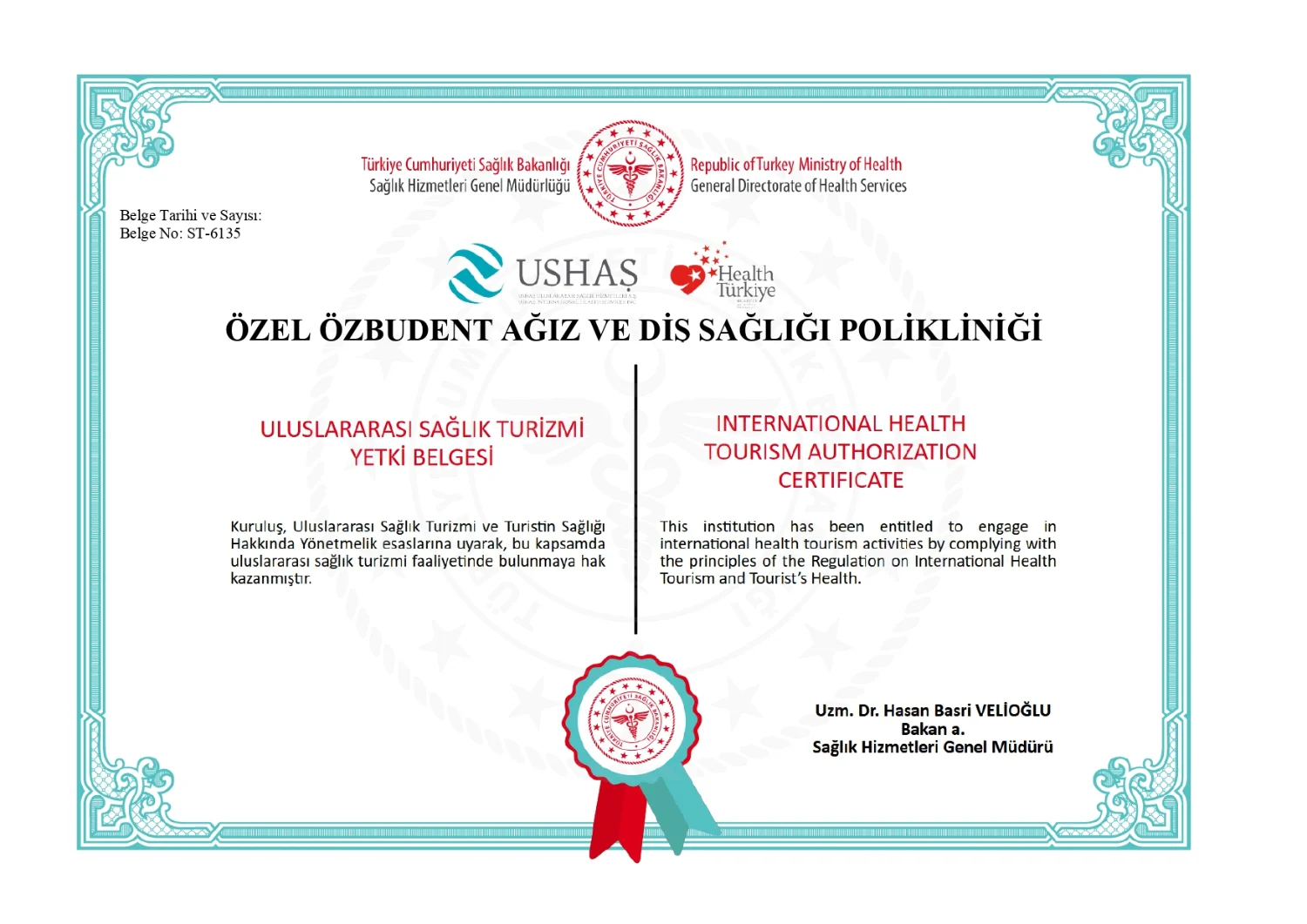

Özel ÖzbuDent Oral and Dental Health Polyclinic holds the International Health Tourism Authorization Certificate, issued by the Republic of Türkiye Ministry of Health under certificate number ST-6135. This certificate shows that our clinic meets the service and quality standards of international health tourism legislation and is officially authorized to serve patients coming from abroad.
Within the HealthTürkiye program, we accompany our international patients end to end — from examination to treatment planning — in implants, cosmetic dentistry and all oral and dental health treatments. Please contact us for detailed information.

You are currently outside our WhatsApp support hours. If you have an emergency, please call us — our clinics are open every day until 03:00. You can still leave your message; we'll get back to you as soon as the line opens.