Preserves tooth structure
The tooth is not cut down; only a sub-millimeter layer is removed from the front surface. Among cosmetic treatments, veneers are the most conservative permanent option.
Porcelain veneers (laminate veneers) are custom-crafted porcelain shells just 0.3–0.7 mm thick, bonded only to the front surface of the tooth. They correct color, shape, size, and mild alignment issues while preserving the tooth's natural structure. Because their light translucency closely mimics tooth enamel, the result looks like a natural smile — not a 'done' one.
With veneers, the tooth is not reshaped by cutting it down; in most cases only 0.3–0.7 mm of enamel is removed from the front surface (in some cases no preparation is needed at all). Custom-made porcelain shells are then permanently bonded to the front of the tooth using specialized adhesive systems. The key difference from a crown: the tooth is prepared only on the front face, not all the way around.
Unlike a crown, which requires 360° reduction, a veneer requires preparation of the front face only — preserving the vast majority of healthy tooth structure.
The light translucency of porcelain closely resembles natural enamel; the veneer integrates with the tooth and produces no opaque or artificial look.
Color, shape, and length are planned with digital smile design tailored to your facial features, lip line, and expectations.
Before permanent bonding, a mock-up and try-in let you see your new smile in the mirror; only after your approval is the final version applied.
Veneers are ideal for patients with healthy teeth and gums who are unhappy with the aesthetics of their front teeth. Definitive suitability is determined by your dentist following an intraoral examination, gum assessment, and bite analysis.
Antibiotic (tetracycline), excessive fluoride, or root-canal-related discoloration that whitening cannot lighten is concealed to achieve the shade of white you want.
Spaces between front teeth are closed permanently in just a few sessions — no braces required.
Front teeth that are chipped at the edge, worn and shortened over time, or structurally small and misshapen regain natural form and length.
For minor alignment and rotation issues that don't require orthodontics, veneers make teeth appear straighter; for more pronounced crowding, orthodontics is recommended first.
What sets veneers apart from other cosmetic solutions is their ability to deliver the most natural-looking, longest-lasting result with the least removal of tooth tissue.
The tooth is not cut down; only a sub-millimeter layer is removed from the front surface. Among cosmetic treatments, veneers are the most conservative permanent option.
Thanks to enamel-like translucency and surface texture, a veneered tooth is virtually indistinguishable from a natural tooth.
The porcelain surface is non-porous; it resists coffee, tea, and tobacco staining far better than composite fillings and maintains its luster over time.
With the right indication and regular oral care, veneers last 10–15 years or more without issues; modern bonding technologies are exceptionally strong.
Unlike orthodontic treatment that can take years, color, shape, and mild alignment concerns are resolved in 2–3 sessions — roughly 1–2 weeks.
Digital smile design and a mock-up try-in let you preview the outcome in advance; any detail you're not satisfied with is adjusted before permanent bonding.
The right solution depends on the current condition of your teeth, the degree of discoloration, and your expectations. A quick comparison:
A veneer is applied only to the front surface and preserves maximum tooth structure; a zirconium crown wraps around the entire tooth 360°. Crowns are indicated for teeth with significant tissue loss, large fillings, or root canal treatment; veneers are the first choice for cosmetic improvement on otherwise healthy teeth.
Composite bonding is completed in a single session and is more budget-friendly; however, it can discolor over time and has a shorter lifespan. Veneers are more durable, more stain-resistant, and aesthetically superior. Bonding suits minor touch-ups; veneers are recommended for a lasting transformation.
If your teeth have a good shape and the staining is surface-level, teeth whitening is tried first — it is simpler and more straightforward. For deep or structural discoloration that whitening cannot resolve, veneers provide a permanent solution.
For moderate to severe crowding, rather than using veneers to make teeth 'appear' straighter, orthodontics (braces or clear aligners) should be used first to actually correct the alignment; veneers can then be added afterward for color and shape if desired. The best approach is decided together at your consultation.
From your initial consultation to your new smile, the entire process is guided by digital smile design — with a try-in and full transparency at every step.
Your teeth, gums, and bite are evaluated; a smile analysis is performed using photos and digital measurements to determine your suitability for veneers.
Your new smile is designed on-screen based on your facial features and expectations; a mock-up lets you preview it in your own mouth.
Minimal preparation is carried out on the front surface of the teeth according to the approved design, precise digital impressions are taken, and temporary veneers are placed.
The porcelain shells fabricated in the laboratory are tried in your mouth; color, shape, and length are verified one final time and fine adjustments are made if needed.
The approved veneers are permanently bonded using a specialized adhesive system; your bite is checked and a follow-up plan is arranged along with care instructions.
Let us assess your suitability for veneers together. Preview the outcome in advance with digital smile design and a mock-up try-in, and enjoy a comfortable treatment journey with flexible payment options.
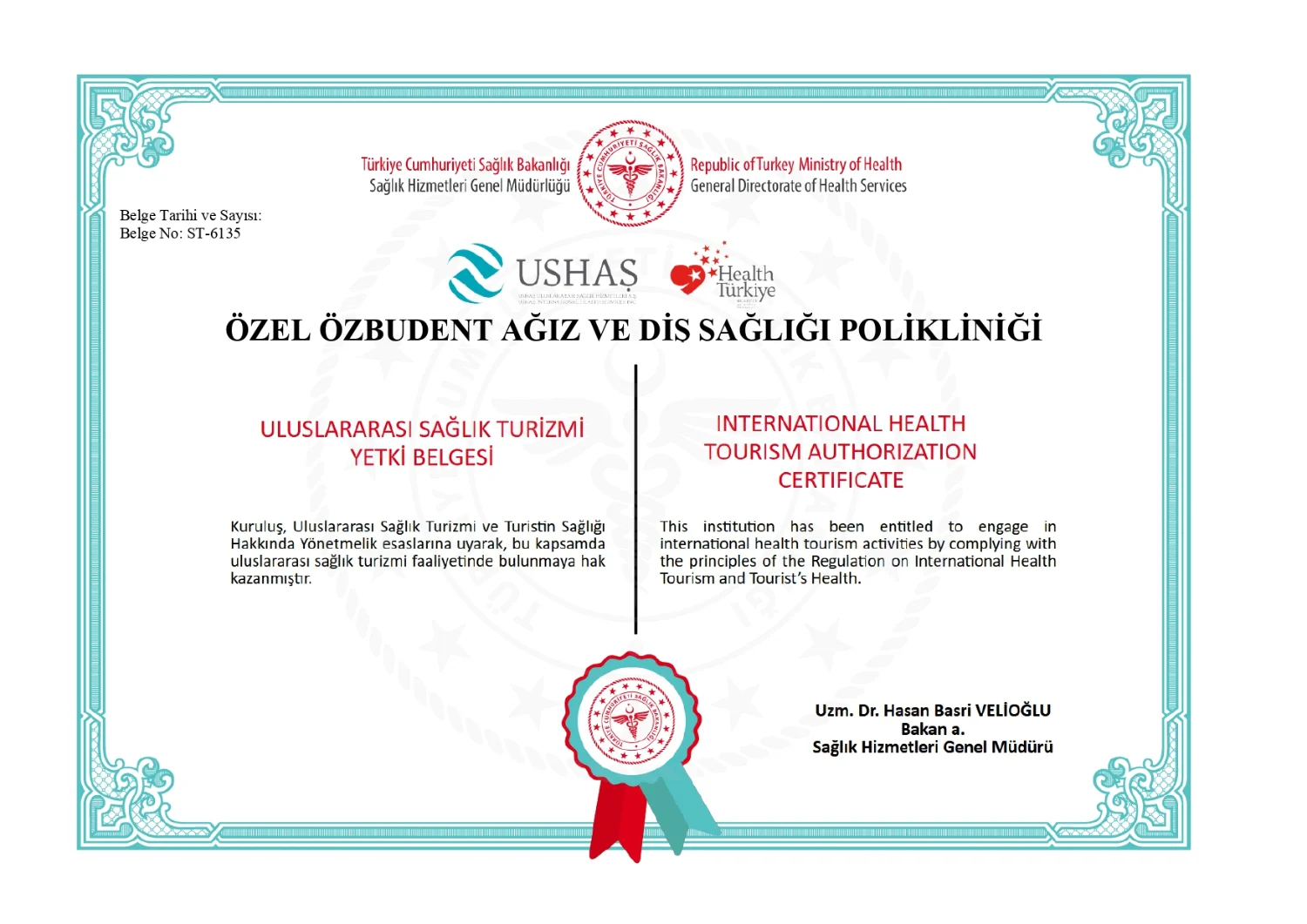

Özel ÖzbuDent Oral and Dental Health Polyclinic holds the International Health Tourism Authorization Certificate, issued by the Republic of Türkiye Ministry of Health under certificate number ST-6135. This certificate shows that our clinic meets the service and quality standards of international health tourism legislation and is officially authorized to serve patients coming from abroad.
Within the HealthTürkiye program, we accompany our international patients end to end — from examination to treatment planning — in implants, cosmetic dentistry and all oral and dental health treatments. Please contact us for detailed information.

You are currently outside our WhatsApp support hours. If you have an emergency, please call us — our clinics are open every day until 03:00. You can still leave your message; we'll get back to you as soon as the line opens.