Fissure SealantPreventive · single session
The deep grooves on the chewing surfaces of molars are sealed with a flowable material. This painless, quick procedure prevents cavities from forming in areas a toothbrush cannot reach.
Pediatric dentistry (pedodontics) is the specialty that protects the health of baby and permanent teeth from infancy through adolescence, ensuring children meet the dentist without fear. At ÖzbuDent, every step — from preventive care to fillings — is planned around your child's comfort.
Pedodontics is the branch of dentistry focused on protecting the health of baby and permanent teeth in children aged 0–13, monitoring oral and jaw development, and treating problems using child-appropriate methods. The goal is not only treatment, but preventing cavities before they form and instilling lifelong oral hygiene habits from an early age.
Caring for young patients differs from adult dentistry: exams and treatments progress step by step, through play and trust-building, adapted to the child's age and cooperation level. This transforms the dental chair from something feared into something familiar.
Baby teeth are far more than temporary; they play a key role in chewing, speech, and jaw development and act as natural space maintainers for the permanent teeth growing beneath them. Losing a baby tooth too early can lead to crowding of the permanent teeth.
A first exam is recommended when the first baby tooth erupts, no later than age 1. Early introduction allows us to assess baby-bottle cavity risk and guide parents on proper oral care habits.
In pedodontics, behavior management is just as important as treatment: anxiety is minimized and procedures are broken into short, comfortable sessions. The primary focus is preventive care — addressing problems before they grow.
Regular pediatric dental follow-up builds the foundation for a lifetime of healthy teeth through habits established at a young age.
Preventive measures such as fissure sealants and fluoride treatments stop cavities before they begin, heading off more extensive treatment down the road.
Timely preservation of baby teeth and the use of space maintainers after early loss supports permanent teeth erupting in the correct position and a well-aligned bite.
Children who have positive experiences at a young age never develop dental anxiety; check-ups become a lifelong habit rather than something to avoid in adulthood.
Parents receive practical, age-appropriate advice on brushing technique, nutrition, pacifier use, and bottle habits.
Every child from the first tooth through adolescence benefits from pediatric dental follow-up. The most common reasons for a visit are listed below.
The introductory exam when the first baby tooth erupts, followed by regular six-month check-ups, is the most reliable way to catch problems before they cause symptoms.
For children who snack frequently, fall asleep with a bottle, or struggle with brushing, fissure sealants and fluoride treatment significantly reduce the risk of cavities.
Decay in baby teeth is treated with fillings or pulpotomy; early intervention after a fall or impact — whether for a chipped or loose tooth — is decisive for the tooth's future.
If a baby tooth is lost before its time, a space maintainer is placed in the gap to prevent neighboring teeth from drifting and to stop the permanent tooth from erupting in the wrong position.
From preventive to restorative care — the main treatments we plan together at your child's exam, tailored to their needs.
The deep grooves on the chewing surfaces of molars are sealed with a flowable material. This painless, quick procedure prevents cavities from forming in areas a toothbrush cannot reach.
A fluoride varnish that strengthens tooth enamel is applied to the teeth by the dentist in a controlled dose. Repeated at regular intervals, it noticeably increases resistance to tooth decay.
A decayed baby tooth is cleaned and restored with a filling; if the decay has reached the nerve, a pulpotomy (partial root canal) keeps the tooth healthy in the mouth until it is naturally ready to fall out.
A small appliance that holds the space left by a prematurely lost baby tooth; it reserves room for the permanent tooth growing beneath and reduces the risk of future orthodontic problems.
A four-step journey — from first meeting to regular follow-up — that respects your child's pace.
Your child gets to know the clinic and the dentist through play, without any rush; teeth, gums, and jaw development are gently evaluated.
Cavity risk is assessed; a personalized protection plan — including fluoride, fissure sealants, and nutrition advice — is shared with the family.
Any necessary treatments are completed step by step in short, comfortable sessions suited to the child's cooperation; each step is explained before it is performed.
Six-monthly check-ups monitor tooth and jaw development; preventive treatments are renewed as needed.
Small daily habits repeated at home are just as important as in-clinic care in shaping your child's dental health.
Start brushing twice a day with an age-appropriate toothbrush and the amount of toothpaste your dentist recommends as soon as the first baby tooth appears; parental supervision should continue through school age.
It is the frequency of sugar exposure — not just the amount — that drives decay. Reduce sugary and acidic snacks between meals, and encourage the habit of drinking water.
Putting a baby to sleep with a bottle or a sweetened pacifier causes rapidly progressing decay on the front teeth; only water should be given at night.
Even without any complaints, a six-monthly check-up catches problems before pain begins and strengthens your child's positive relationship with the clinic.
Don't wait for a problem to appear — let's get started with a preventive plan before anything grows. Book an introductory exam at one of our child-friendly clinics.
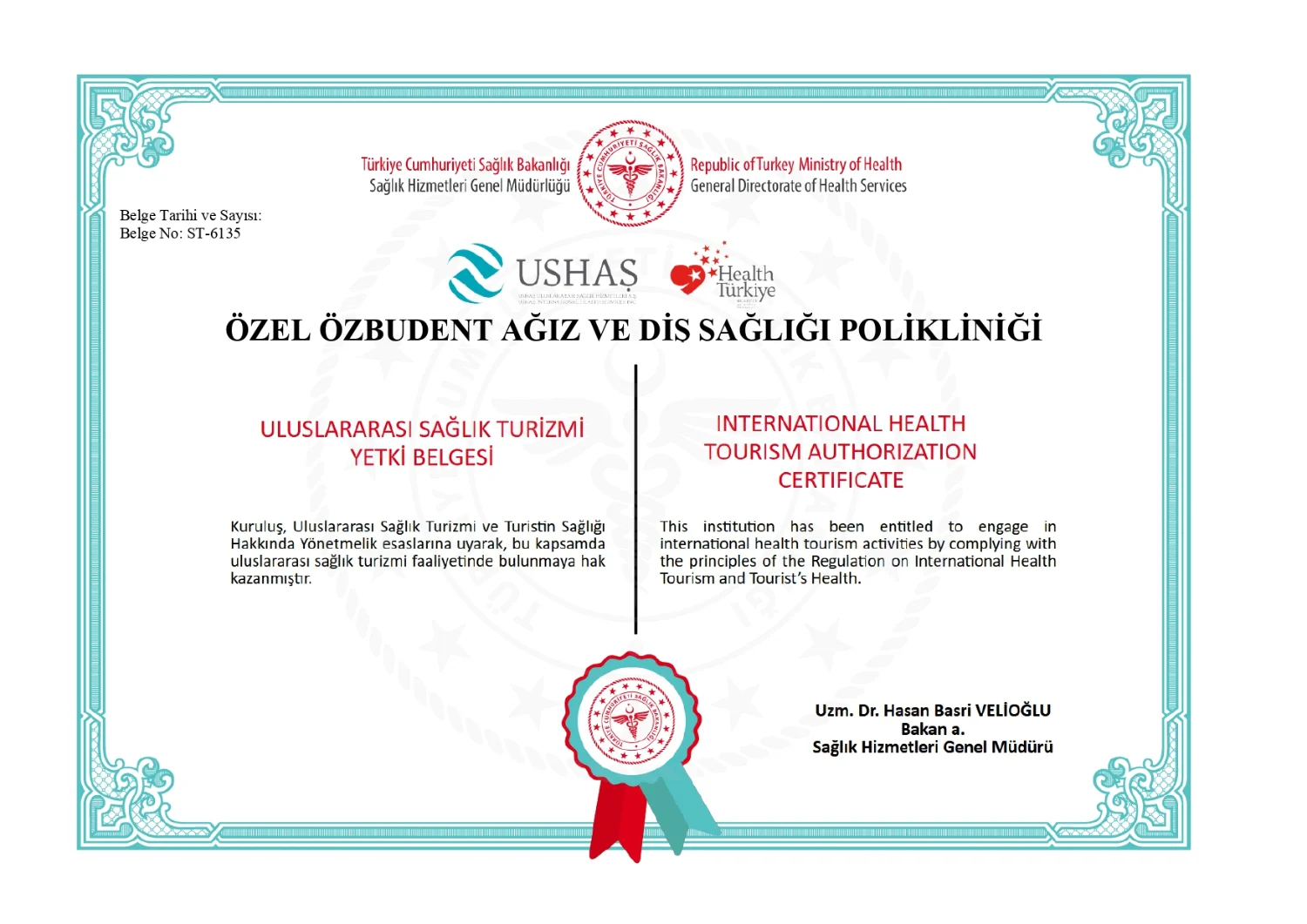

Özel ÖzbuDent Oral and Dental Health Polyclinic holds the International Health Tourism Authorization Certificate, issued by the Republic of Türkiye Ministry of Health under certificate number ST-6135. This certificate shows that our clinic meets the service and quality standards of international health tourism legislation and is officially authorized to serve patients coming from abroad.
Within the HealthTürkiye program, we accompany our international patients end to end — from examination to treatment planning — in implants, cosmetic dentistry and all oral and dental health treatments. Please contact us for detailed information.

You are currently outside our WhatsApp support hours. If you have an emergency, please call us — our clinics are open every day until 03:00. You can still leave your message; we'll get back to you as soon as the line opens.