Chip RepairSingle tooth · same day
A front tooth corner chipped from a fall or impact is rebuilt in the same visit using composite matched to the natural color and shape of the tooth.
Composite bonding for chipped, worn, gapped, or misshapen teeth: a tooth-colored aesthetic composite resin is applied directly to the surface without drilling, then sculpted and polished in the same appointment. A fast, comfortable, and reversible aesthetic solution.
Composite bonding is the process of correcting the shape, size, or color of a tooth by applying tooth-colored aesthetic composite resin to the tooth surface layer by layer. The material is cured with a special light, then sculpted and polished to match the natural tooth form.
The most important difference from veneers and crowns is that no drilling is required: healthy tooth structure is fully preserved. This means the procedure is completed in a single visit, comfortably and often without any anesthesia.
Small chips and cracks, gaps between teeth (diastema), worn edges, minor shape and size irregularities, and localized discoloration that does not respond to whitening can all be corrected with bonding.
A veneer is a thin porcelain shell fabricated in a lab and may require minimal tooth reduction; bonding is a no-drill composite applied directly in the mouth. Veneers last longer and resist staining better, while bonding is faster, more affordable, and reversible.
A conventional filling repairs tooth structure lost due to decay; bonding is performed purely for aesthetic purposes. Using premium aesthetic composites and a layered tinting technique, the result is planned to be indistinguishable from a natural tooth.
Bonding is the aesthetic treatment that corrects minor smile imperfections with minimal intervention in the shortest possible time.
In most cases, the procedure is performed and completed in the very same appointment following the consultation — no impressions, lab work, or waiting period.
No drilling is required; the material bonds directly to the enamel surface. Because healthy tooth tissue is left untouched, the procedure is reversible.
The shade and translucency of the composite are selected layer by layer to match neighboring teeth; the shape is hand-sculpted to suit your face and smile line.
Minor chips or wear that may occur over the years can be refreshed in a single visit without removing the existing bonding; it is more cost-effective than porcelain alternatives.
It is ideal for patients with good dental and gum health who wish to correct minor to moderate smile imperfections without any drilling. Suitability is assessed at the consultation.
Small chips, notches, and worn edges on front teeth are the most common indication for bonding; the lost corner is rebuilt in the same visit.
Spaces between front teeth are closed or narrowed with composite while distributing the addition evenly between both neighboring teeth, preserving a natural proportion — preferred by patients who are not candidates for orthodontic treatment or who want quick results.
Small or irregularly shaped teeth and localized discoloration that does not respond to whitening are masked with composite layers; the tooth's length and form are harmonized with the smile line.
Bonding may be insufficient in cases of significant tooth structure loss, large chips, widespread discoloration, or severe bruxism; in these situations, alternatives such as veneers or crowns are recommended. Active decay or gum disease must be treated before bonding is considered.
Bonding can be planned across a wide range of scopes — from a minor touch-up on a single tooth to a full smile design covering all front teeth.
A front tooth corner chipped from a fall or impact is rebuilt in the same visit using composite matched to the natural color and shape of the tooth.
The gap between front teeth is closed by adding a balanced amount to both adjacent teeth, preserving natural proportions without making the teeth appear too wide.
The front surface of the tooth is covered with a thin composite layer without any drilling; color, shape, and length are corrected in a single visit. It is the no-drill, cost-effective alternative to porcelain veneers.
Length, shape, and spacing are planned simultaneously across all front teeth; the smile line is comprehensively reshaped with composite. Often combined with teeth whitening.
Four steps from consultation to a bright, natural result — completed in a single visit in most cases.
Your dental and gum health is checked; the areas to be corrected, the target shape, and the shade are planned together with your dentist.
The tooth surface is cleaned and micro-etched with a special bonding agent; no drilling is performed, and anesthesia is not required in most cases.
Tooth-colored composite is applied layer by layer, each layer is cured with a special light, and the material is sculpted to match the natural tooth form.
The bite is checked; the surface is polished until it achieves the natural sheen of enamel, and aftercare recommendations are provided.
With proper care, composite bonding lasts an average of 5–8 years without issues; minor touch-ups can extend this further.
Composite is more susceptible to staining in the first few days; avoiding coffee, tea, red wine, and highly pigmented sauces for the first two days is recommended.
Habits such as nail-biting, chewing on pens, or cracking hard nuts put stress on composite edges; if you grind your teeth, a night guard is recommended.
Brushing twice a day, flossing, and regular professional cleanings maintain both the shine of the bonding surface and your overall dental health.
The surface is re-polished at check-ups every 6–12 months; minor wear and staining can be addressed in the same visit before they progress.
Let us evaluate together whether bonding can correct the minor imperfections in your teeth. With a consultation and smile analysis we will plan the right approach, and flexible payment options make the process easy.
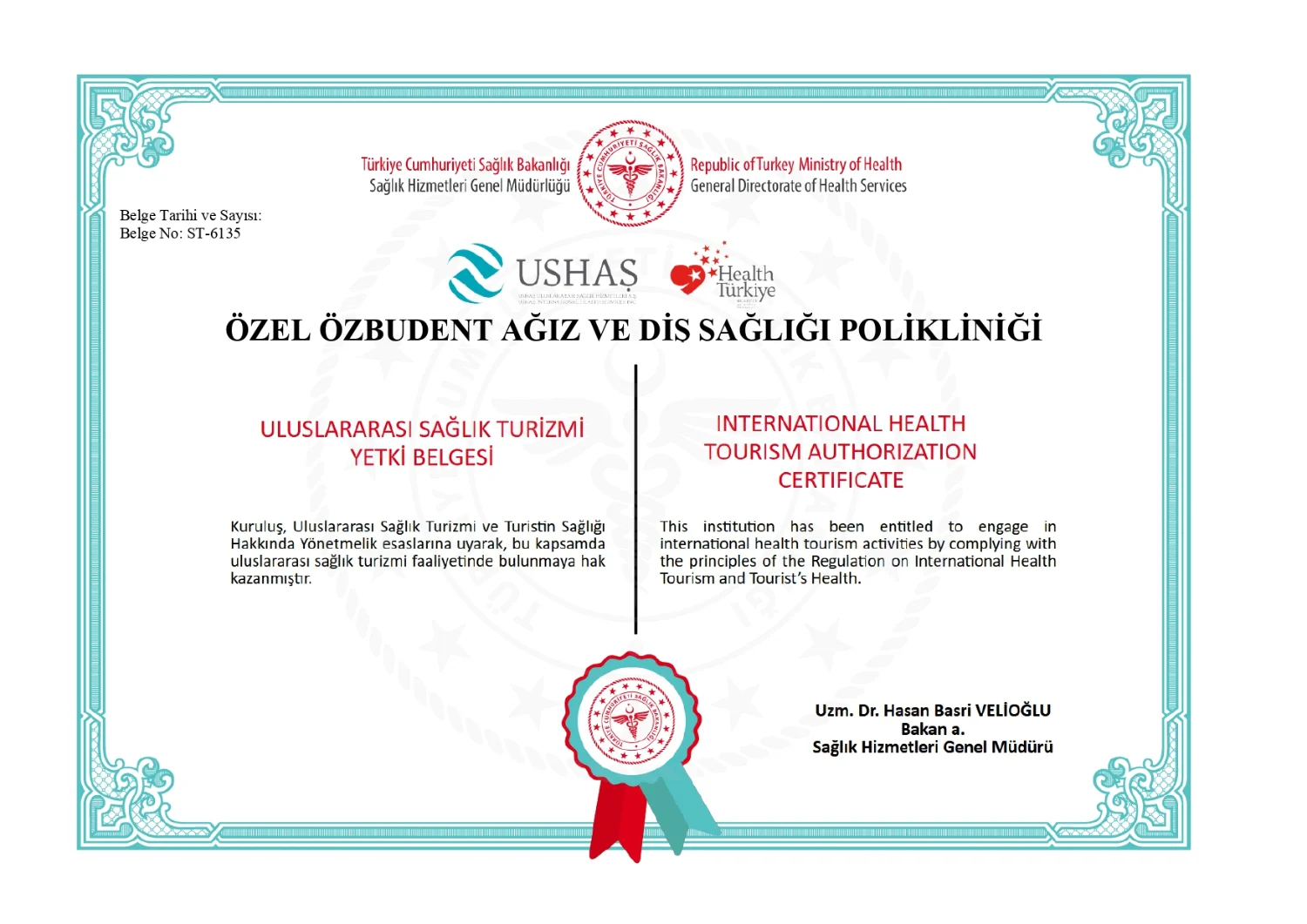

Özel ÖzbuDent Oral and Dental Health Polyclinic holds the International Health Tourism Authorization Certificate, issued by the Republic of Türkiye Ministry of Health under certificate number ST-6135. This certificate shows that our clinic meets the service and quality standards of international health tourism legislation and is officially authorized to serve patients coming from abroad.
Within the HealthTürkiye program, we accompany our international patients end to end — from examination to treatment planning — in implants, cosmetic dentistry and all oral and dental health treatments. Please contact us for detailed information.

You are currently outside our WhatsApp support hours. If you have an emergency, please call us — our clinics are open every day until 03:00. You can still leave your message; we'll get back to you as soon as the line opens.